
Our Facsimiles
Peterborough Bestiary
Peterborough-Bestiary
A Masterpiece of Medieval Natural History and Illumination
The Peterborough Bestiary ranks among the most celebrated and magnificently illuminated bestiaries of medieval Europe. Produced in England around 1300, this extraordinary manuscript combines captivating depictions of animals with moral and religious teachings, offering a unique insight into the intellectual and imaginative world of the Middle Ages.
Animals as Mirrors of the Human Soul
During the medieval period, bestiaries were among the most popular and widely read illustrated books. They described both real and mythical creatures, interpreting their characteristics through a Christian allegorical lens. Lions, eagles, elephants, and unicorns were regarded not merely as creatures of nature, but as embodiments of moral and spiritual truths.
The Peterborough Bestiary follows this tradition in a particularly remarkable manner. Each animal portrayal combines observations of the natural world with symbolic interpretations intended to guide the medieval reader towards a virtuous and righteous life.
A Manuscript of Exceptional Artistic Quality
The miniatures of the Peterborough Bestiary represent one of the finest achievements of early fourteenth-century English manuscript illumination. Executed in brilliant colours, enriched with delicate gilding, and remarkable in their attention to detail, they create a visual world of extraordinary vitality and expressive power.
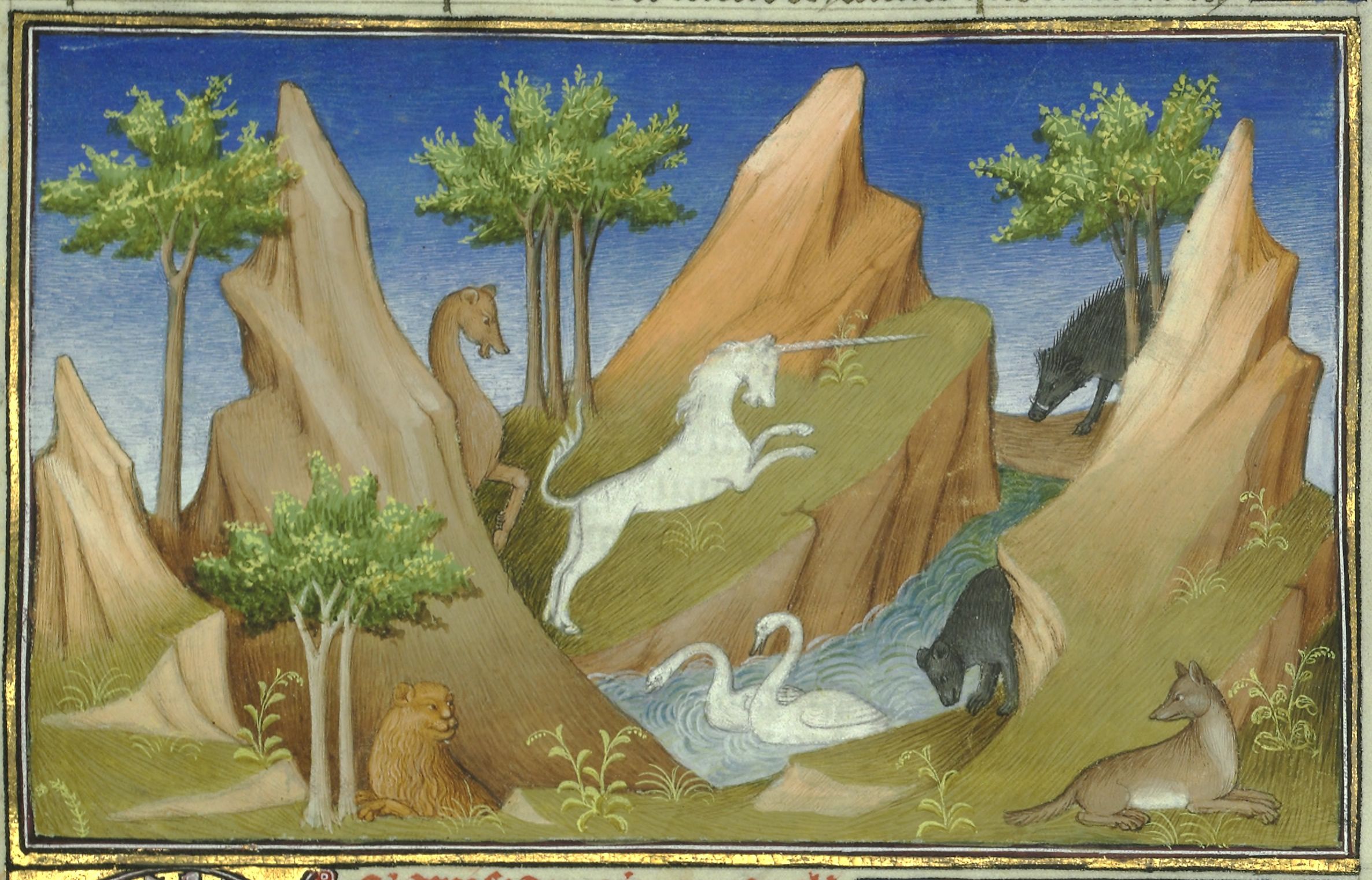
Particularly striking are the imaginative depictions of exotic and mythical creatures. Alongside lions, deer, and birds, the viewer encounters dragons, basilisks, and unicorns, blurring the boundaries between natural observation and medieval imagination.
The Medieval Worldview Brought to Life
The Peterborough Bestiary is far more than a collection of animal tales. It reflects an age in which nature, faith, and symbolism were inseparably intertwined. Each illustration provides a window into the medieval mind, while simultaneously showcasing the exceptional skill and artistry of England’s manuscript painters.
The manuscript was most likely produced within the cultural sphere of the renowned Benedictine Abbey of Peterborough and stands as a testament to the flourishing artistic and intellectual life of English monastic centres during the High and Late Middle Ages.
A Window into the Fascinating World of Medieval Bestiaries
Today, the Peterborough Bestiary is regarded as one of the most beautiful surviving bestiary manuscripts. Its exquisite miniatures, rich symbolic language, and outstanding historical significance make it an indispensable witness to medieval cultural history.
This high-quality facsimile edition allows collectors, scholars, and enthusiasts alike to experience the manuscript page by page in all its original splendour and to rediscover the captivating world of medieval animals, symbolism, and imagination.
Steckbrief
The Peterborough Bestiary | |
| Creation Year | ca. 1300 – 1310 |
| Place of Origin | England |
| Library | British Library, London, England |
| Signature | MS 53 |
| Extent | 22 foils |
| Language | Latin |
| Genre | Bestiary |
| Style | Gothic |
| Miniatures | 104 Miniaturen und 116 zierreiche Initialen |
| Artist / Workshop | / |
Die Edition
The Peterborough Bestiary | |
| Format | 34,7 cm x 23,1 cm |
| Limitation | / |
| Publisher | Faksimile Verlag |
| Item Number | 72111 |
Fragen und Antworten
The Peterborough Bestiary is one of the finest surviving illuminated bestiaries from medieval England. Created around 1300, it combines descriptions of animals with moral and religious interpretations, offering a fascinating insight into medieval thought, symbolism, and artistic achievement.
A bestiary is a richly illustrated medieval manuscript that describes animals, both real and mythical. Beyond natural history, these creatures were understood as moral examples, each conveying spiritual lessons and Christian teachings through allegory.
The manuscript is celebrated for its exceptional artistic quality, remarkable preservation, and sophisticated iconography. It represents one of the highest achievements of English Gothic illumination and is regarded as a masterpiece of medieval book art.
The Peterborough Bestiary features a wide variety of creatures, including lions, eagles, deer, elephants, and birds, alongside legendary beings such as unicorns, dragons, and basilisks. Each animal carries a symbolic meaning that would have been immediately understood by a medieval audience.
The manuscript provides valuable insight into the medieval worldview, revealing how people of the Middle Ages understood nature, morality, religion, and the relationship between the visible and invisible world.
Its illuminations are distinguished by their vibrant colours, refined compositions, expressive figures, and remarkable attention to detail. The artists succeeded in creating images that are both visually captivating and rich in symbolic meaning.
Beyond its artistic beauty, the manuscript demonstrates humanity's enduring fascination with animals, storytelling, symbolism, and the search for meaning. It remains an important witness to medieval culture and imagination.
The manuscript is preserved in the collections of the British Library in London, where it is recognised as one of the most important examples of medieval English illumination.
Unlike many earlier Romanesque bestiaries, the Peterborough Bestiary reflects the artistic developments of the Gothic period. Its figures are more expressive, its compositions more sophisticated, and its decorative programme considerably richer, demonstrating the evolution of manuscript painting in fourteenth-century England.
Medieval scholars did not draw the same distinction between natural history and symbolism that modern readers do. Creatures such as unicorns, phoenixes, and dragons were valued not for scientific accuracy but for the spiritual truths they conveyed. Their inclusion illustrates how medieval learning combined observation, tradition, theology, and imagination into a unified vision of the world.


